06 February 2012
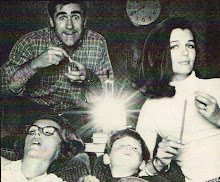
It's half-time...
I liked the game but I liked this even more.
Labels:
'merican Stuff,
Authentic,
Grateful,
Sans Bullshit
04 February 2012
I used to know them.
The Family Portrait, 1988Like many military brats -- when it was time to settle down -- it was time to find the settled. A good looking crowd -- My ex-wife's family. Third generation Chicago North Shore. The wedding photographer announced the family picture and as my new Irish Catholic relations came from every direction a guest laughed, "When does Rose Kennedy roll out in her wheel chair?"
I didn't think of looking for a family to go with my wife. That wasn't my intent. With hindsight, it's easy to see how I embraced them and became a Chicagoan in short order. Much like moving in the Army - - You quickly absorb everything in your new surroundings or you're screwed.
I was married for 13 years... to my wife and to these people. I loved them very much but after the divorce, except for four people, I never saw or heard from any of them again. In all fairness -- I never reached out. I wasn't sure how. They may have had the same problem with me.
A friend is going through a divorce and I think how sad it is to not only lose your spouse, but their family as well. I lost so many friends in the Army after only knowing them for a year or two. It's inconceivable to me to lose people you know for 13 years. When asked if I knew someone in this picture... I said, "I used to."
Labels:
brat,
I'm Here to Leave,
Morning Dress
03 February 2012
02 February 2012
Not Just Any: Shawl Collar Cardigan
"M" Magazine, October, 1986 (photo credit: Kyle Ericksen)"The sweater was PRL (Polo Ralph Lauren) in Argyll & Sutherland Highlander stripe wool. Any time you see an unusual shawl collar cardigan, 90% chance it's PRL. It's been done in fair isle, gun check, chalk stripe, reggie stripe, awning stripe, indigenous American, you name it. Wool, cashmere, linen, cotton, jute...." Jamgood
Labels:
M Magazine,
Not Just Any,
Polo,
Shawl Lapel,
Sweaters
01 February 2012
Italian Why Nots
31 January 2012
Palm Beach Life: A Box of Crackers


Where do these things come from? Actually, this one came from the Strand Bookstore but they're everywhere. Used bookstores, thrift shops, hospital consignment stores, attics and basements. Some stink of mildew or cigarette smoke but I don't care -- I love them. That non-slick patina has a homemade quality that's simple and honest.Unique among the Life, Look and Time magazines are regional publications like Palm Beach Life. Most advertising is local and looks it. Format is simple and photography mediocre, but those small budgets result in unique images that almost 50 years later have held up better than national magazines of the era.
And then there are those rich crackers. It's always fun to look at the box they came in.
Labels:
advertising,
Florida,
Palm Beach,
photography,
ROP
30 January 2012
When Route 66 Came Through Town
It ain't St Augustine but it's close
Glenn Corbett's Pullover (as opposed to Popover) via Instagram

All photos from Ohio 66Graphic designer and friend of 37 years, David Belmonte, remembers the filming of the '60s television show, "Route 66" in St Augustine, FL. The episode, "This is Going to Hurt Me More Than it Hurts You" starred Soupy Sales and featured a pie fight in my college dining room.
If, from the title of this post you thought that the famous U.S. highway went through my hometown, you’d be forgiven. No, the Mother Road unfolded west. Gloriously West. From Chicago to The Coast. But Route 66, the television show went everywhere, including south by southeast, for at least part of a broadcast season. And ultimately snaked its way over to my neck of the coastal woods, St. Augustine, Florida. It was the early 1960s. It was very cool. And I was there.
Sometime in the warm fall of 1963, and shortly after our family moved there, the show series made a filming stop. It happened at about the same time as the assassination of John F. Kennedy. With that exception, the early 1960s was a rather quiet time. And to be honest, I actually liked it that way.
It was to be my only peek, however brief, at our nation that, for the most part, was still unified. And that also meant everyone was unified around the television watching Route 66 on its appointed night. Tellingly, it was also as if our culture was on the eve of great fracture, while on the show, the central characters were trying to keep it all stitched together with an asphalt thread.
Never mind that we were too young to always get the plots. They were going places! The actors weren’t locked into some stage set, so the show had a much more realistic look and feel to it. We’d see establishing shots of them rolling into towns from then very empty highways.
When Tod (Martin Milner) and Linc (Glenn Corbett replacing George Maharis) drove into our own town onscreen, past the conquistador statues with their swords held high in welcome, we shouted with recognition. They were actually driving on the same concrete roads we drove on! How cool was that? And it only got better as scenes of a pre-boutique, pre-Disney era St. Augustine flickered by.
When the Route 66 film company came to town, we all wanted to get a glimpse of the two stars, somehow resembling better versions of our average selves in that peculiar way that only Hollywood can conjure up. It was announced that a public press conference/public greeting would be held at the hospital where they had been filming. We headed to the lot next to the side of the building where a sizable crowd had gathered.
There were lights on stands, lots and lots of cables and big moving vans of equipment, on the sides of each were emblazoned the show’s name. Standing in the middle of it all were Milner and McCord. They smiled and waved and answered a few questions. They were trim, pressed and polished.
Local society women wearing whipped-up do’s and their Sunday best pushed close and flirted and asked for autographs. Men in dark suits nervously shuffled, trying not to look embarrassed at being fans of the show. It was the first time ever that I saw news cameras and reporters.
But what everyone wanted to see was The Car. Especially with the two actors in it. A Corvette, any Corvette would have been so rare in a small town in those days that it might as well have been a UFO. The Car wasn’t at the press conference, and I was very bummed. My memory tells me that during filming we would catch glimpses of their ‘63 or new model ‘64 Sting Ray skimming around town, with or without film crew in pursuit.
I can’t square that in my mind because what I would have seen was a tan Corvette, not red, not blue. (A tan version was used later in the series because it reflected less contrast on black and white film.) I still want to remember seeing it somewhere, though. Maybe around the central square, cruising under the live oaks hung with Spanish moss, so bright and otherworldly it would have looked as if it was lit by its own sun. So did I ever see it? I don’t remember.
While they were filming at the hospital, a friend of the family was cast as an extra. Her part was to walk out of one room, head down the hall, and walk back into another room. For a while the whole town sort of felt like we were at the center of the TV universe. Then it was over and the film company was gone.
When the highly anticipated St. Augustine episode finally aired we were of course excited, but also a little puzzled that the writers decided to go campy with it. Something about idle yachting types and Soupy Sales and pie throwing. Why had they chosen such a silly plot? Surely there were other more interesting ideas to be explored.
It seemed out of character for both the show and our sublime city. But as the episode played out, it actually managed to work okay, with a sprinkling of hero shots of “the ancient city” throughout. We eventually spotted our friend in her scene, barely recognizable with her back to the camera, walking away. More shouting and pointing at the TV set. Everyone was happy, and it generated a lot of local buzz.
So what of Route 66’s influence, if any, on style? The show occupied its pop culture spot at the very zenith of trad. At the precipice of a giant cultural shift, clothing style may have gone arguably downhill from there. But if you view trad style through the prism of Mad Men, it’s no wonder each generation puts its stamp on couture, having followed for years the fashion dictates-—read conformity—of its parents. In the show the two actors often wore slim jeans-cut chinos. And white socks with black loafers. Or boots. And cropped canvas jackets. Did Tod and Linc wear sunglasses? Maybe. Hats, never.
This much I know: It was Tod and Linc whom Tintin had in mind twenty years after the show ended when he was allowed by the owner of a venerable St. Augustine men’s shop to explore the back stockroom for authentic trad wear. Tintin let me in on his find with a big treasure-finding grin. He’d discovered several shelves of original 1960s madras plaid shirts from exactly that Route 66 era. Tags, cardboard, tissue and cello wrap: all original.
Interestingly, the Route 66 theme music was not the “Get Your Kicks On Route 66” song written by Bobbie Troup that pops up every now and then in your head, but was in fact a lilting piano theme by Nelson Riddle. And that theme was very “of the era,” especially compared to TV themes that came later like Lalo Schifrin’s more urgent “Mission Impossible.” Distopian times called for strident themes, and we had not yet arrived.
For Tintin, with his depth of experience with clothing and style, this blog site is self-explanatory. We can explore and take subtle style cues from those earlier days. And chuckle to ourselves, smug in the knowledge that an unnerving number of men today dress like they’re about to mow the lawn. Or just did. Even at restaurants—a vulgar notion that never would have occurred to most men of Tod or Linc’s era, the early 1960s. The trad sixties.
Etched forever in my memory is an old yet modern TV show about two sharp young men and a cool car shimmering on a hot road and heading to our little corner in this vast and confident nation. David Belmonte
Route 66 Credits
Labels:
60's TV,
David Belmonte,
Florida,
Route 66
27 January 2012
An Actress & Bobby Bland by G. Bruce Boyer
Smooth doesn't come close enough
L to R, Little Junior Parker, Elvis Presley and Bobby Bland"I think the year was 1963, and my date was a young Broadway actress who became my first wife. I can't remember the name of the club in downtown Brooklyn for the life of me. Seeing Bobby Bland that night helped get me into the relationship, but the marriage didn't go so well and I had to get out of it myself." G. Bruce Boyer
Bobby “Blue” Bland was born Robert Calvin Bland in Rosemark, Tennessee in 1930. The “Blue” didn’t come into his name until his family had moved to Memphis and he started hanging around the blues joints along notorious Beale Street with cats like B. B. (Blues Boy) King and Johnny Ace.
"If Beale Street could talk, if Beale Street could talk,
So many married men would take their beds up and walk.
Except one or two who never drink booze,
And the blind man on the corner singin’ the Beale Street Blues."
So many married men would take their beds up and walk.
Except one or two who never drink booze,
And the blind man on the corner singin’ the Beale Street Blues."
By 1950 Bland started singing with – according to music historian Albin J. Zak – a “loose conglomeration of musicians known as The Beale Streeters. Besides Ace on piano, the group included B. B. King on guitar, Earl Forest on drums, Billy Duncan on saxophone”, with Bobby supplying the vocals, as well as working for other blues musicians doing any odd jobs.
For a while he was B. B. King’s driver after the guitar player and singer had several hit records. Bland himself cut his first record in 1952, about the time a young Elvis Presley probably would have first heard and seen him around that part of town.
He quickly became a part of what was in the air, the incendiary blending of gospel-blues-R&B music that was being developed by Sam Cooke, Ray Charles, Jackie Wilson, Chuck Berry, James Brown and other early 50s musicians into what became known as Rock ‘n Roll.
But it wasn’t until four years after he’d first stepped into the recording studio that Bland cut the song that made him: “Farther on Up the Road”. Thereafter he had hit after hit on the R&B charts – in 1961 he was named #1 Artist of the Year by Cashbox -- even though he never managed to cross over to white audiences then or later.
Bland had a unique voice and style, an unforgettable blend of sweetness and hoarseness, alternately smooth and rough like seersucker, that could whisper like velvet one minute and growl like a wounded tiger the next. The songs that he recorded in the late 50s and early 60s – “Farther on Up the Road”, “I Pity the Fool”, “Cry, Cry, Cry”, Turn on Your Love Light”, and “That’s the Way Love Is” remain exemplars of that incomparable style today.
That’s the short early history of Bland. What isn’t usually noted, perhaps not even remembered, is the power and charisma of the man on stage. I only heard him once in a club in Brooklyn, but it was enough to know he had an incredible stage presence. He wasn’t overtly or typically handsome, but he made up for it in pure scintillating style.
His dress was as cool as you could find: slicked back hair which fell to the side in waves, lustrous laser cut mohair suits of pristine Continental styling, blindingly white dress shirts, highly polished black Chelsea boots with Cuban heels, and that gigolo-thin mustache. And his demeanor charged with sensuality as he leaned into the driving melody.
The women in the audience went wild for Bobby Blue Bland, screaming rapturously with every little gesture or cooing sound he made. They would have torn him from the stage and been on him like a dog on a bone. Everything about him shimmered in the limelight.
Sam Cooke was more handsome, Ray Charles a more creative talent, B. B. King and Chuck Berry had longer and bigger careers, James Brown more influential, and Little Richard and Fats Domino appealed more to the teenagers.
But as the big band trumpets and saxes blared out their pulsating tempo, the T-Bone Walker-style guitar filling in the staccato blues notes, the drummer punching away, and Bobby repeating “I pity the fool, I pity the fool, I pity the fool” while cradling the mike in a provocative embrace and rhythmically swaying from side to side, he was one of the sexiest performer to ever come out of R&B. And the most undeservedly unknown to the general public.
So you take it where you find it,
or leave it like it is.
That's the way it's always been.
That's the way love is.
or leave it like it is.
That's the way it's always been.
That's the way love is.
Discography
Bobby Blue Bland: The Anthology (Duke Peacock)
Bobby Blue Bland: Greatest Hits, Vol. 1 and 2 (MCA)
Two Steps from the Blues (MCA)
Midnight Run (Malaco)
Together for the First Time: B.B. King & Bobby Blue Bland (MCA)
That Did It (MCA)
Soul Legend (MCA)
Soulful Sound of Bobby Blue Bland (Half Moon U.K.)
Labels:
Bobby Blue Bland,
G Bruce Boyer,
Music
26 January 2012
Spam & Skeeters
Spams Guys
Before Mosquitoes
After mosquitoesI've always enjoyed descriptions of minutiae in damn near everything. From a history of manners in America in the early 17th century ( C. Dallett Hemphill's dense but amazing, Bowing to Necessities) to Thomas Wolfe's three page description of meeting Esther Jack on a NYC street in The Web and the Rock.
Consequently, I've tried to share details in stories that are interesting and, if possible, a little out of the box. Recently, I've been bombarded with spam like this:
Знакомства, общение, развлечения, секс, любовь, серьезные отношения и даже брак - все это вы найдете на нашем сайте интим знакомств. С помощью нашего сайта знакомств посетители могут создавать личные странички, которые позволяют максимально описать увлечения, привычки, характер и, конечно, внешность владельца, поскольку кроме текстового описания и фотографий пользователи могут добавлять аудио и даже видео материалы о себе и своих друзьях. Искать свою половинку с помощью шести видов поиска стало еще легче! У нас на сайте вы найдете: секс знакомства, свинг знакомства, свинг фото, свинг видео.
I once stood directly in front of two Russians in a custom's line as they conversed non-stop for almost two hours. It's not a romantic language and neither is that comment. This trickle of spam has turned into an onslaught not unlike the time I pulled my trousers down in a jungle.
On the advice of friend and quartermaster, Sgt. Macejko, I purchased, at my own expense, Cutter mosquito repellent. Macejko told me Army issue repellent - jungle juice as it was known - was useless in Panama, just pissed the mosquitoes off, and was only good for starting fires. But Cutter would do the job. Macejko advised frequent application of Cutter on exposed skin as well as clothing.
Today, the smell of Cutter flashes me back to a Panama of black palm, albino scorpions and mysterious trails of ants with pieces of leaves on their backs going God knows where. After a couple of days I was actually thinking there might not be any mosquitoes -- Until the night nature called and I went for a squat in the jungle. It's hard to describe the sensation of hundreds of mosquitoes attacking your butt - - except to say I didn't look for reading material.
I just wish there were a repellent like Cutter for spam. Until then, word verification is back on while I fight a new war with the Russians. Eezveeneete.
Labels:
Army Stuff,
Out of the Box,
The Booger Vault
25 January 2012
A Hot & Humid Night with Elmore Leonard
This guy looked like I felt.
Wally's, Cold Shot to the Heart - Second shelf down on far left
Our row
"I allow three exclamation points every 100,000 words." E.L.
The Ten RulesThe night was unseasonably warm and humid for January in New York. Crime novelist Wallace Stroby, attired in black Schott motorcycle jacket, black t-shirt and Coleman mustard Timberlands, strolled into the art deco masterpiece on 47th Street that is the Center for Fiction. Suddenly, Stroby screamed loudly, "Shit, I never got my tickets!!!"
I think I broke six of Leonard's rules. Maybe seven. A lotta people crammed into the second floor of the Center for Fiction to hear Elmore Leonard talk about writing last night. Crappy Fish & Chips for a late lunch appeared in my gut half way through. My heart was not into picture taking but I caught enough of what Stroby called, "pure gold!!!"
"I wrote a scene about a detective who quits to become a photographer. He borrows a wheel chair from a friend who stole it at the airport and sits outside a terminal taking pictures of people arriving in Miami. Guy comes over and says, "Nice camera. Mind if I check it out?" Fella hands him the camera and the guy walks off with it. The fella gets outta the wheel chair, knocks the guy down and beats his head against the curb.
I thought it was okay, but the scene stews with me for a couple weeks and I changed it. Guy takes the camera, walks a few steps, turns back to the fella in the wheel chair and says, 'Can you walk?' Fella in the wheel chair nods. Guy walks back and gently puts the camera back on the fella's lap."
Thanks for the motivation, Wally. At least I have my opening:
"Bad idea getting involved with a broad who knows guns. I slept with a woman I went through the police academy with. Afterwards, she broke down and cleaned a .25 automatic in bed. I never went back. I'd have preferred it if she just had a cigarette."
Labels:
Elmore Leonard,
Exploring NYC,
NYC Events,
Trad Noir Novel
24 January 2012
Electric Lady Studio


Studio A and the control room
My host, Tony Sylvester, before the protective glass
Studio A's sofa
If this is anything like LSD then I missed out.
Tony in reception
Reception
Reception's tunes...
Turntable...
and preamp.
I'm sure there was plenty of room
The Ladies...Carly Simon, Patti Smith, Bjork, Lily Allen, Ronnie Spector, Hole, Beyonce, Mary Blige, Gwen Stefani, Madonna, Lene Horne, Whitney Houston, Aretha Franklin, Erykah Badu, Sheryl Crow...
and the Gents: Chuck Berry, Curtis Mayfield, Peter Frampton, David Bowie, Stevie Wonder, AC/DC, Led Zeppelin, John Lennon, The Clash, The Rolling Stones, Guns N’Roses, Lou Reed, Van Halen, Kiss, The Cars, Foreigner, Prince, Al Green...Jimmy Hendrix bought and built Electric Lady Studio on 52 West 8th Street and less than a half block from Gray's Papaya in Greenwich Village. It's a flashback to the early '70s and everyone who was anyone recorded here. They still do.
If the National Park Service can claim an obscure Vice President's birthplace from the late 19th century as a national monument, then what the Hell would Electric Lady be? Amazing history here can only be trumped by Apple Studios -- Maybe.
37 years ago this month, in Studio A, John Lennon provided back up vocals and lead guitar on David Bowie's cover of Lennon's, Across the Universe in Studio A. A year earlier it was Patti Smith recording her first single, Hey Joe / The Piss Factory. Lately, it's Lily Allen, Radiohead and The Strokes.
No tours. No gift shop. But I'm guessing someday partitions will hold back oggling tourists and the murals will be stabilized behind think glass. I'll be with my grandnephew and park service senior citizen pass complaining about my knees, asking a ranger for the bathroom and remembering the rainy Monday night I was here all those years ago ... before everything got so fucked up.
Labels:
Electric Lady Studio,
Exploring NYC,
John Lennon
Subscribe to:
Posts (Atom)